From Products to Platform
Malwarebytes Next Gen Platform
Executive Summary
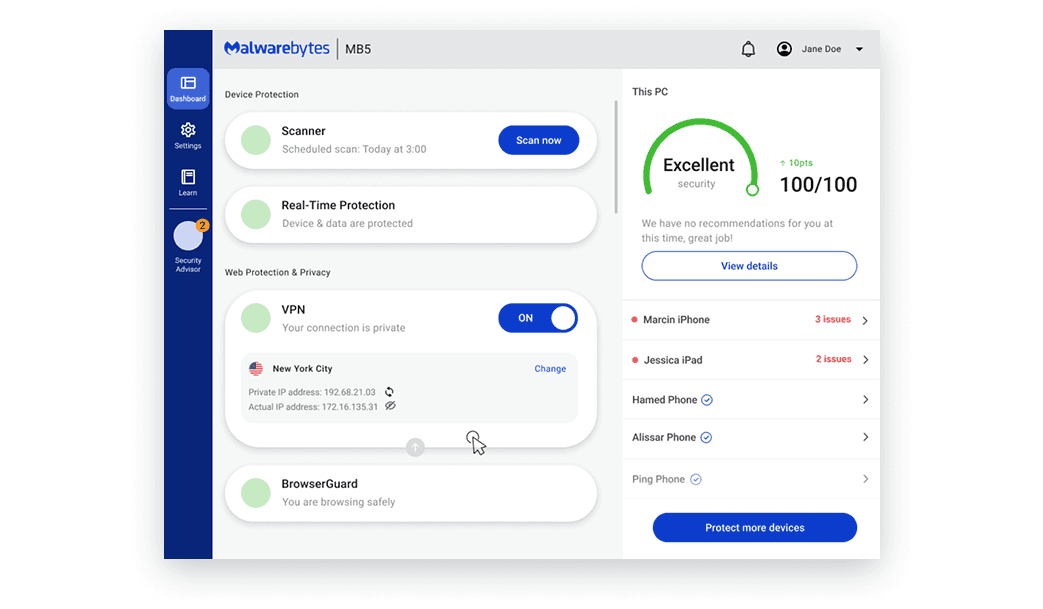
Malwarebytes’ shift toward bundled consumer offerings required more than feature integration, it demanded platform unification. I led the design transformation to evolve fragmented standalone products into a cohesive, extensible experience, defining the dashboard framework and modernization strategy that would support long-term scalability. In parallel, I guided a team of designers and aligned stakeholders across product and engineering to execute the transition.
The Problem
Create a unified platform experience that enables users to understand, manage, and act across all security protections within a single dashboard.
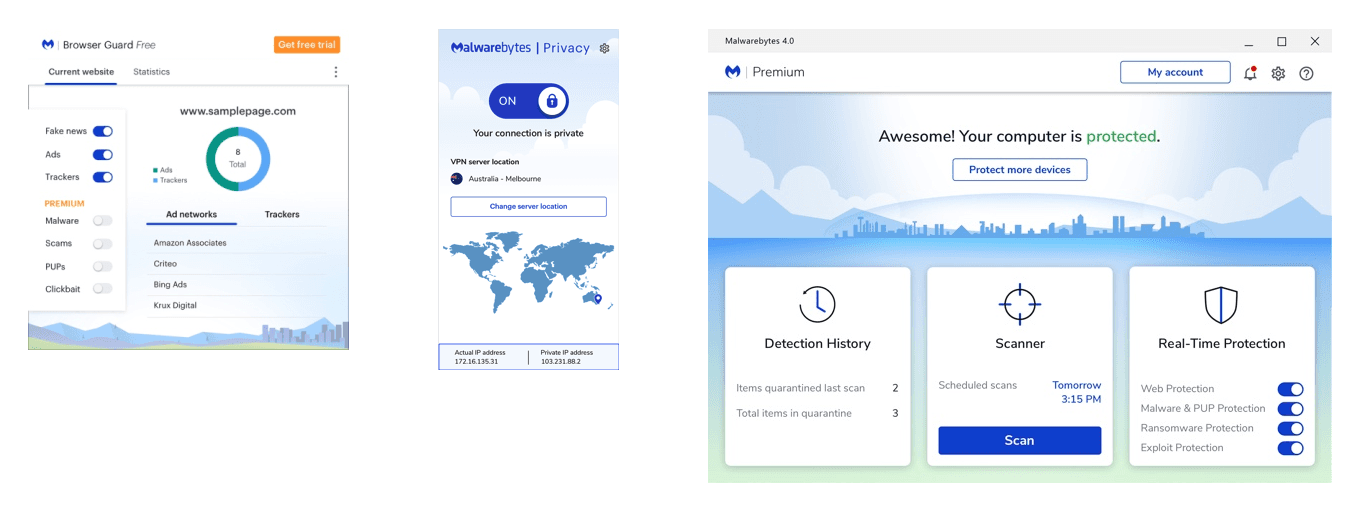
Create a unified experience that enables users to understand and take action across multiple security protections within a single platform.
Business goals
Increase engagement and retention by repositioning Malwarebytes as an ongoing personal security advisor, not just a collection of tools.
Defining Foundation
Architectural Alignment
Converging standalone products required more than visual consistency, it demanded architectural alignment. Each product had evolved independently, with overlapping functionality, inconsistent terminology, and differing mental models.
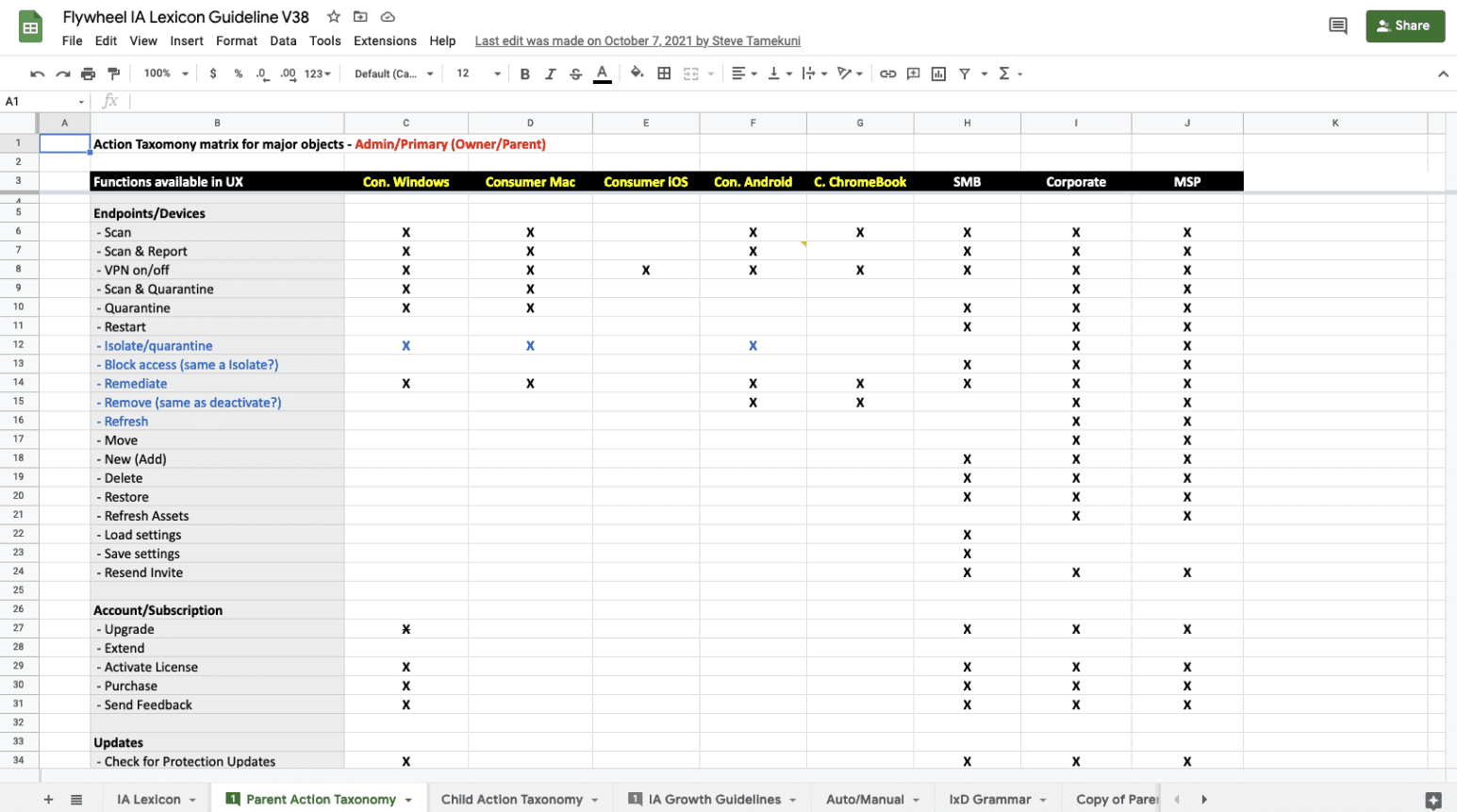
To establish a shared foundation, I led the creation of a master feature architecture that mapped functional overlap and clarified prioritization. A critical early decision was standardizing taxonomy. Some products framed functionality as objects (nouns), while others emphasized actions (verbs). To create consistency across the platform, we restructured features around actionable verbs — aligning the experience around what users could do, not just what existed.
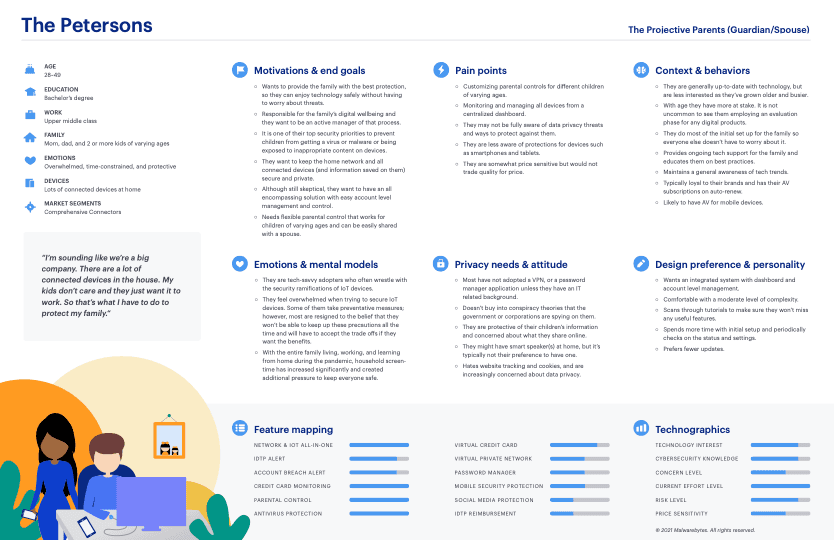
Principles for platform convergence
Balance MVP delivery with platform vision
As a net-new product initiative with significant engineering investment, the team needed to design for immediate go-to-market timelines while ensuring the experience could scale alongside evolving bundled offerings. We evaluated MVP solutions against a longer-term platform vision to avoid introducing technical or experiential limitations that would constrain future iterations.
Design for iteration under tight timelines
Given aggressive delivery targets and the complexity of converging standalone products into a unified experience, design outputs needed to support phased implementation. Early concepts were structured to allow for incremental rollout without compromising the long-term engagement model.
Support both passive and proactive users
The converged platform needed to accommodate users who preferred minimal interaction after installation, as well as those seeking deeper visibility and control over their security posture. This required prioritizing information hierarchy and actionability without overwhelming casual users.
UX Ways of Working
As Product Design Manager for Consumer Offerings, I established operating guidelines to support quality, clarity, and team sustainability during a high-visibility platform initiative.
With multiple products converging under aggressive timelines, it was critical to create structure without slowing momentum.
1. Structured Design Reviews
Bi-weekly critiques ensured alignment across workstreams, surfaced blockers early, and reinforced shared quality standards.
2. Constructive Feedback Culture
We emphasized clear, respectful critique to promote learning, elevate craft, and reduce defensive dynamics under pressure.
3. Transparent Communication
Design decisions, tradeoffs, and updates were consistently documented and shared to maintain stakeholder trust and alignment.
4. Reducing Bottlenecks
Design artifacts were regularly updated and accessible, enabling asynchronous review and preventing decision delays.
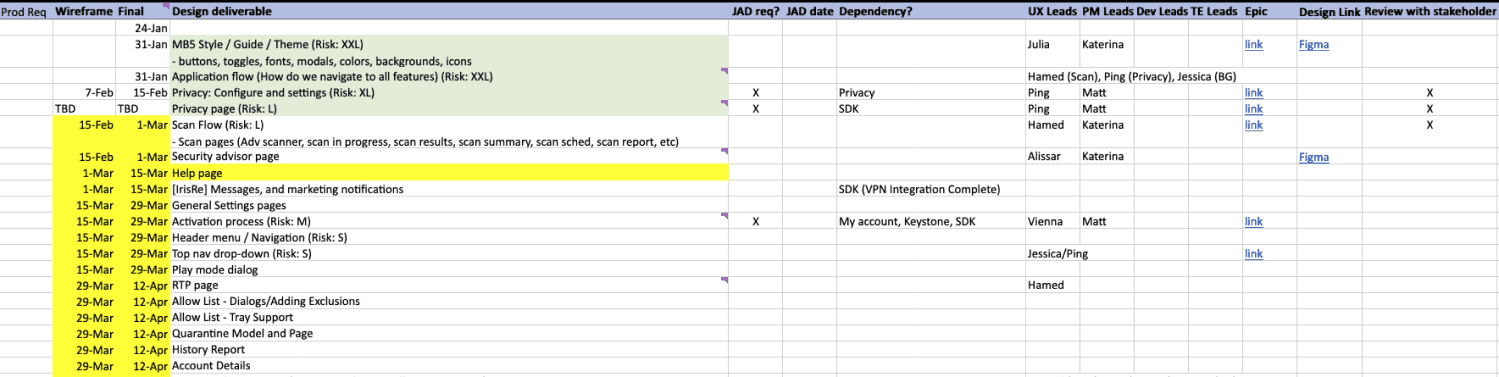
Initial dashboard concept
To support Malwarebytes’ transition from standalone products to a unified platform, the dashboard needed to evolve beyond a static status view.
Rather than acting solely as a monitoring surface, the dashboard would serve as a centralized launchpad where users could understand their protection coverage, manage bundled features, and take action across multiple security tools within a single experience.
To explore how these platform capabilities could be surfaced within a unified experience, the design team began developing early dashboard concepts based on existing product functionality and anticipated bundled offerings.
To support Malwarebytes’ transition from standalone products to a unified platform, the dashboard needed to evolve beyond a static status view.
Rather than acting solely as a monitoring surface, the dashboard would serve as a centralized launchpad where users could understand their protection coverage, manage bundled features, and take action across multiple security tools within a single experience.
To explore how these platform capabilities could be surfaced within a unified experience, the design team began developing early dashboard concepts based on existing product functionality and anticipated bundled offerings.
Early exploration goals
Identify how protection coverage could be represented across multiple tools
Determine what information users would need to manage bundled offerings
Establish an initial hierarchy for cross-product actions
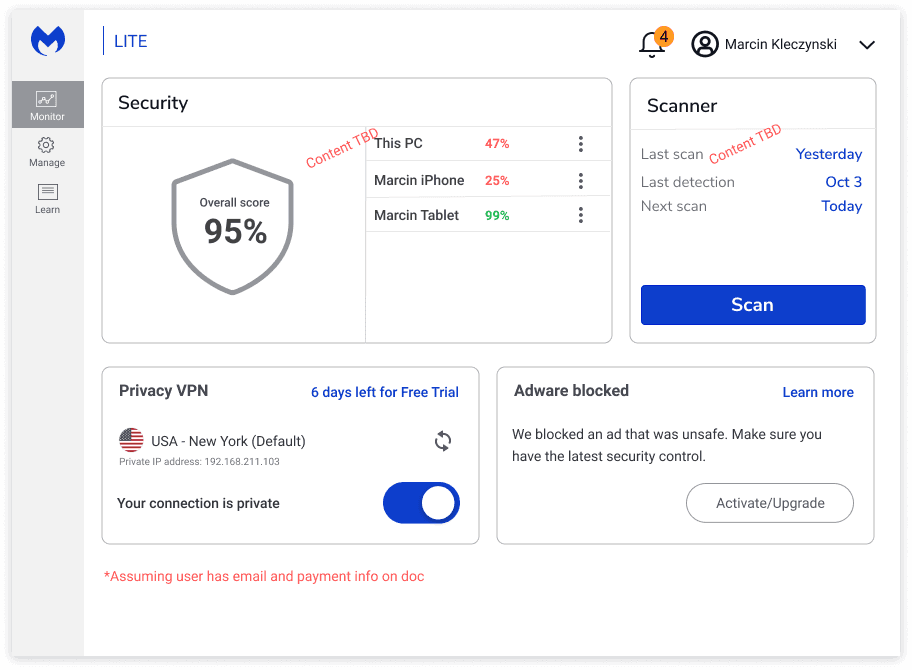
Key learnings
Early concepts surfaced several assumptions about how users engage with their security ecosystem - particularly around feature discoverability and ownership management.
These explorations helped the team better define the strategic role of the dashboard and highlighted areas that required further validation as the platform vision evolved.
Re-aligning with the Platform Vision
Early dashboard concepts surfaced assumptions about how users engage with bundled protections that were not fully aligned with Malwarebytes’ long-term platform vision.
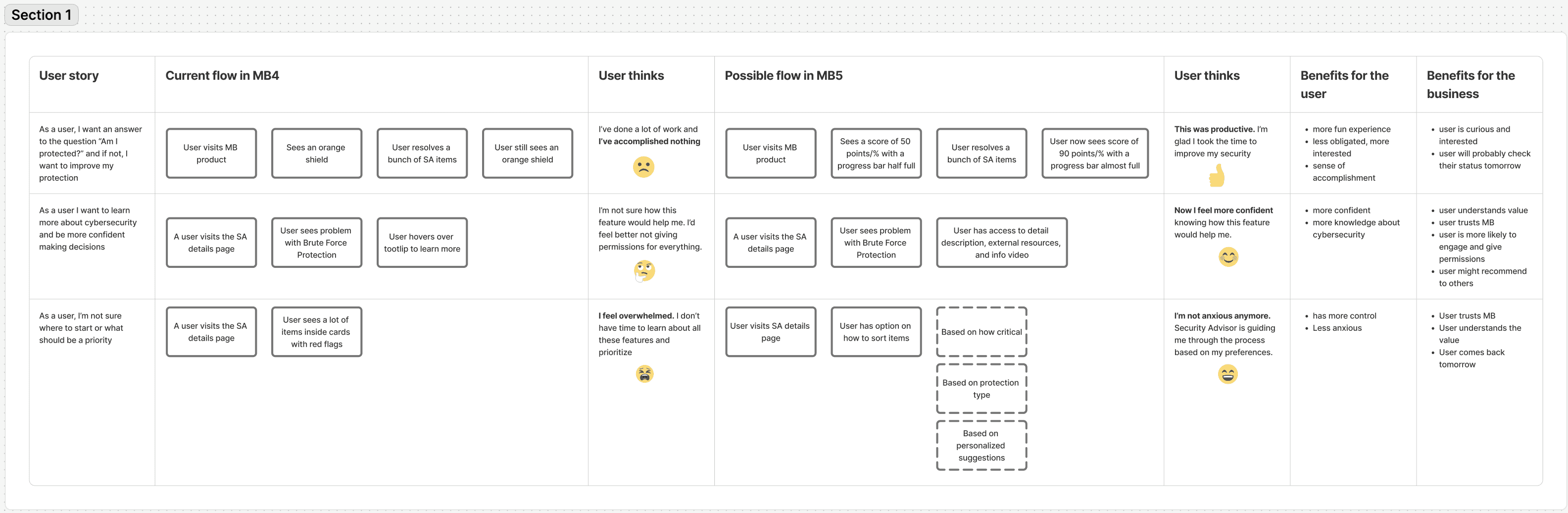
To better understand how our existing products supported - or constrained - this direction, the team conducted a heuristic evaluation across the consumer security suite.
Establishing a Shared Problem Space
To align stakeholders on the evolving product model, I led an in-person working session that guided cross-functional partners — including Product Managers, Engineers, and Executives — through a design thinking and Jobs To Be Done framework.
This process helped formalize user needs and define success criteria for a unified platform experience.
Benchmarking User Mental Models
In parallel, the UX Research team conducted foundational research to better understand how users define and engage with personal cybersecurity.
Insights from these sessions informed how bundled protections could be surfaced in a way that aligned with user expectations of ownership and safety.
Informing Platform Decisions
Combining stakeholder-defined Jobs To Be Done with observed user behaviors allowed the design team to move forward with a shared understanding of how the dashboard should support protection visibility, actionability, and engagement across bundled offerings.
Participatory Design Study
Following the design summit, the team developed modular dashboard components to be used in a participatory design study.
The goal of this study was to better understand how users conceptualize their personal cybersecurity - and what information or actions they expect from a unified security platform.
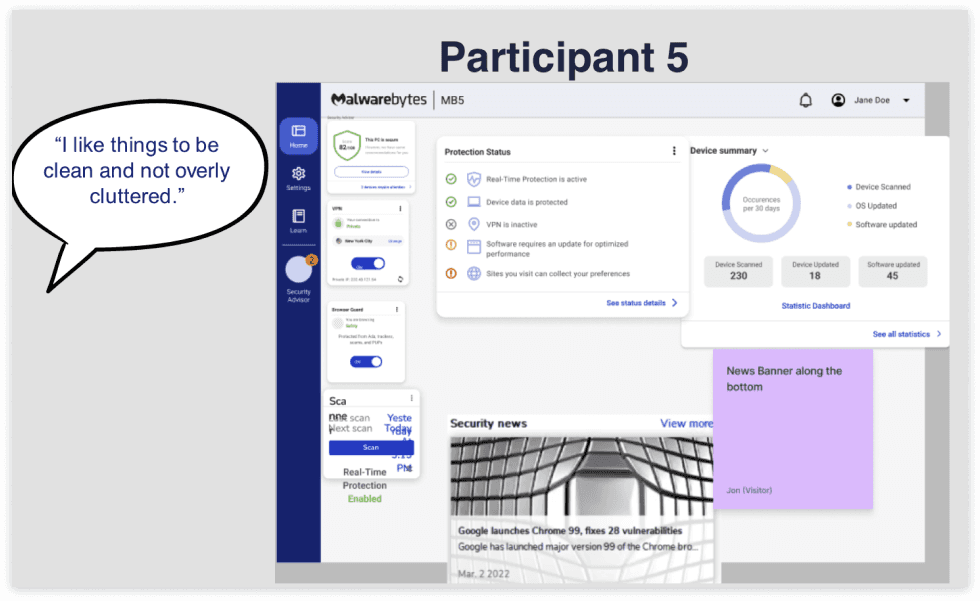
Implications for the Platform Experience
Findings from the study suggested that users were not simply seeking visibility into their protections, but actionable support in maintaining them.
This introduced several key experience requirements:
Personalized recommendations to improve security and privacy
Contextual education around product features
Clear next steps to help users act on recommended protections
Participants also responded positively to a tone of voice that positioned the application as an approachable guide - rather than a passive monitoring tool - reinforcing the opportunity to present Malwarebytes as an ongoing personal security advisor.
Key Insights
While some participants self-identified as highly knowledgeable in cybersecurity, many struggled to articulate how they actively maintain their device security - revealing a gap between perceived expertise and actionable understanding.
Participants also expressed an expectation for greater in-product guidance when managing their protections, indicating that existing tools did not sufficiently support ongoing engagement with their security posture.
Iterating Toward an Advisor Model
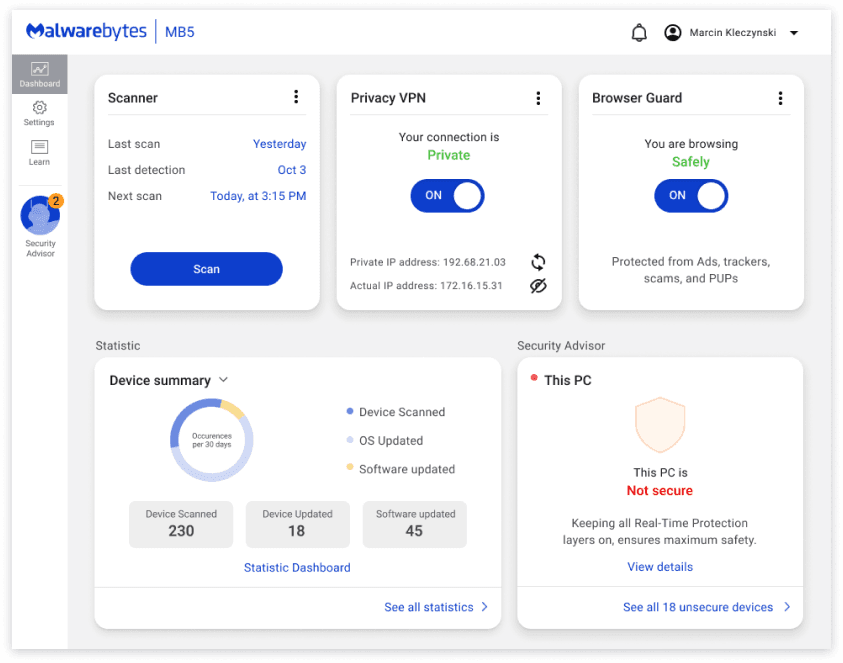
Guided by insights from the participatory design study, the team developed a second dashboard concept that introduced improved visual hierarchy and clearer protection status across bundled offerings.
Evaluation:
While this iteration improved the clarity of system information, it continued to prioritize monitoring over actionable support.
Surfaced protection states without guiding next steps
Risked overwhelming users with informational density
Did not align with users’ expectation for personalized recommendations identified during research
These limitations highlighted the need to move beyond status visibility toward a more adaptive experience that could guide users in maintaining their security posture.
North Star Dashboard Concept
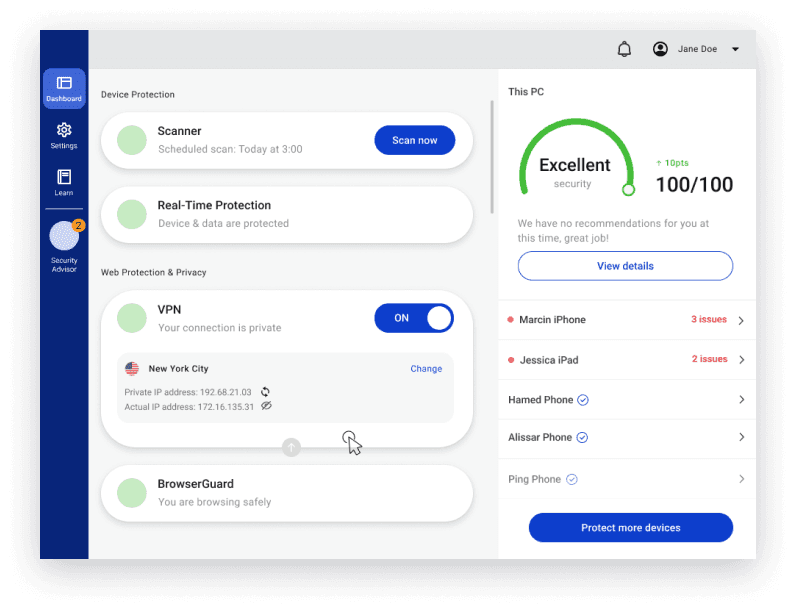
Based on insights from participatory design and stakeholder-defined Jobs To Be Done, the final dashboard concept was restructured to support an advisor-oriented experience — helping users understand and act on their security posture across bundled protections.
Key Changes
Prioritized actionable recommendations for casual users, with the ability to expand into detailed controls for advanced users
Transitioned from card-based layouts to vertically scalable rows to support evolving bundled offerings
Reorganized protections to align with users’ mental models of personal cybersecurity
Introduced contextual education to help users understand and improve their device security posture
Defining the Direction for Platform Convergence
Although the North Star dashboard concept was not launched prior to my departure from Malwarebytes, the proposed architecture was adopted into the product roadmap and approved as the direction for the converged consumer platform.
The concept was used to align cross-functional teams around how bundled protections could be surfaced within a unified experience, and informed early engineering scoping efforts for the initiative. I also partnered with Product and Engineering leads to help define implementation considerations as the platform direction evolved.
This work was later shared in company-wide town halls and incorporated into internal pitch decks as part of Malwarebytes’ strategy to transition from standalone security tools toward an advisor-oriented platform experience.
Future iterations of this work would benefit from evaluating how personalized recommendations influence user engagement and retention across bundled offerings.